Mar 5 2026 - Aug 2 2026
New York City, NY
From early drawings to monumental compositions in steel, Carol Bove’s first museum survey traces her inventive practice across 25 years.
Carol Bove is the first museum survey of the work of Carol Bove (b. 1971, Geneva, Switzerland; lives and works in New York). The exhibition fills the Guggenheim’s spiral rotunda, tracing pivotal shifts in the artist’s career across more than 25 years. Bove’s inventive practice ranges widely, from assemblages of paperback books and intimate paper collages to towering steel sculptures. She explores the workings of perception through ongoing experiments with surface, color, scale, and space, inviting viewers into moments of heightened imaginative awareness.
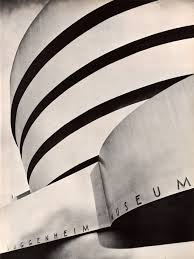
The Frank Lloyd Wright–designed rotunda offers a resonant setting for Bove’s long-standing interest in tuning the relationship between objects and their surroundings. She approaches the building as a sculpture in its own right, subtly activating its distinctive geometries and open sight lines, which allow works to remain visually connected across levels. Throughout the exhibition, she has incorporated spaces for rest, reflection, and play. These include comfortable seating built into the architecture, a tactile library in which materials from the artist’s studio may be handled directly, and artist-made chess tables where visitors are invited to set up a game.
Reflecting Bove’s interest in the way artistic languages are exchanged and transformed over generations, works by other artists appear at times alongside her own. Notably, she partially reveals—for the first time in decades—a mural by Joan Miró and Josep Llorens Artigas that was built into the Guggenheim’s ramps in the 1960s. A diamond-shaped cutout offers a view of the mural, which becomes an element in Bove’s immersive reimagining of Frank Lloyd Wright’s luminous “temple of spirit.”
Credit: Overview from museum website
Exhibition Venues & Dates
Mar 5 2026 - Aug 2 2026
New York City, NY