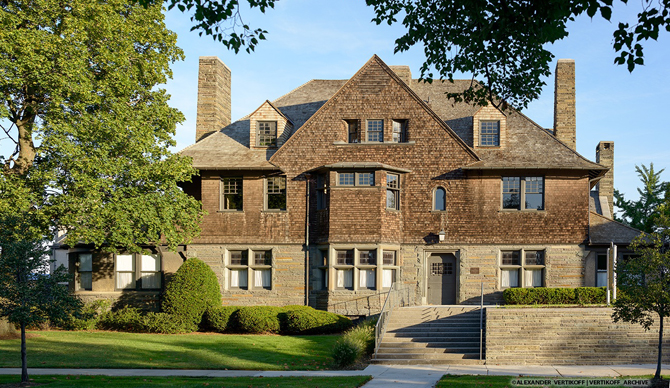
Built by industrialist and art collector Charles Lang Freer in 1892; the Freer House is a masterpiece of American shingle-style architecture and the birthplace of the National Museum of Asian Art at the Smithsonian Institution in Washington D.C. As an early champion of American, Asian, and Middle Eastern art, Free celebrate multiculturalism in the house's mission and programming which continues today. These bonds to our nation's capital and much of the world make the Freer House an ambassador of Detroit's unique cultural heritage.
Artists, architects, and landscape designers, including Thomas W. Dewing, Maria Oakey Dewing, Wilson Eyre, Jr., and Eutrope Ferrand, helped Freer to shape his garden. A garden revitalization project, completed in 2019. The design plan incorporates elements of both the 1893 and 1906 private gardens, using plants and trees authentic to Freer's vision but updated to create a sustainable, welcoming public space.
The Freer House is also recognized for its role in child and family development. In 1920, the Freer House became home to today's Merrill Palmer Skillman Institute (MPSI), a part of Wayne State University, and houses its faculty and meeting rooms.
Although the Freer House's structure and finishes have evolved to suit institutional needs, much of its original grandeur and architectural character remain. The Freer House is open periodically to the public for lectures, receptions, exhibits, and guided tours. Two Freer House events are held annually.