Jun 26 2026 - Nov 8 2026
Buffalo, NY
Ali Banisadr merges the compositional elements of landscape painting with abstract mark-making to create an altogether new form of figuration. The resulting compositions are a carefully composed bedlam of forms that suggest but ultimately deny any specific narrative. Variously reminiscent of gardens of Eden, the seasonal genre pictures of Flemish Renaissance painter Pieter Bruegel the Elder, and Boschian depictions of Hell, Banisadr’s contemporary abstractions call upon the history of painting. The title of the exhibition, borrowed from Albert Pinkham Ryder’s enigmatic painting, The Temple of the Mind, serves as a conceptual framework for the project, suggesting a space where perception, memory, and imagination converge. While the Romantic painter was admired for his pioneering, semi-abstract style, for Banisadr, Ryder holds a space for contemplation amid rising uncertainties.
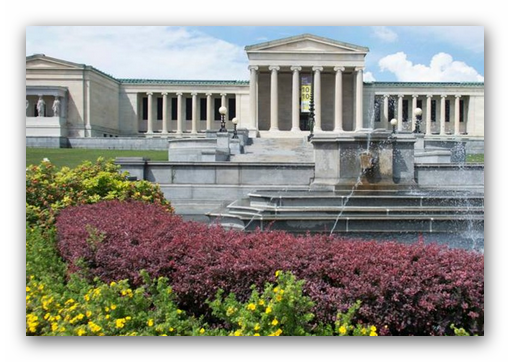
Given his deep interest in art history, the Buffalo AKG has invited Banisadr to participate in the first-ever artist collection intervention. In addition to the installation in the Hemicycle Gallery, a focused selection of Banisadr’s work will be installed throughout the Robert and Elisabeth Wilmers Building, among the dreamlike imaginings of the Surrealists and the unbridled energy of the Abstract Expressionists.
Banisadr reaches across time to draw on a wide range of influences. From art, history, literature, and mythology to music, film, and technology, he thinks of such sources as guiding his hand rather than driving his imagery, and the powerful microcosms he creates are uniquely his own. Within these layered compositions, subtle references to current events and the human condition—conflict, migration, and collective uncertainty—emerge and dissolve within the flux of his painterly language. Originating from one spontaneous moment to the next, hidden figures and beguiling narratives reveal themselves to those who slow down in the present moment.
Credit: Exhibition overview from museum website
Exhibition Venues & Dates
Jun 26 2026 - Nov 8 2026
Buffalo, NY