Nov 8 2025 - Feb 16 2026
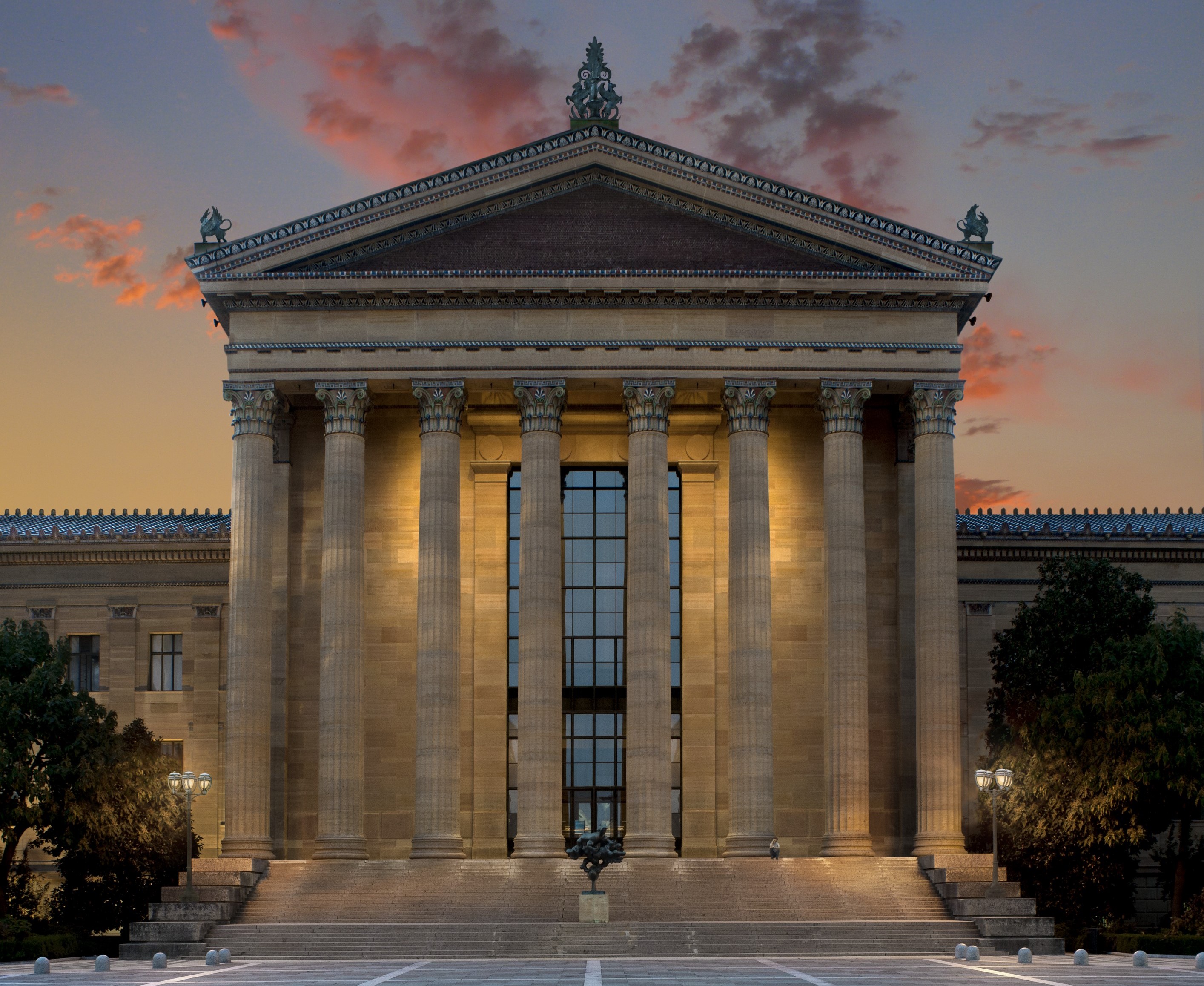
Philadelphia, PA

In his Manifesto of Surrealism of 1924, André Breton celebrated the unbridled imagination as the key to freedom in all aspects of life. Artists responded by inventing a wide variety of new expressive forms designed to stir up the human capacity for wonder and amazement. Dreamworld: Surrealism at 100 will feature approximately two hundred works by more than seventy artists associated with the international Surrealist movement.
The Philadelphia Art Museum will be the only U.S. venue for this traveling exhibition, following distinct iterations at the Centre Pompidou in Paris, which launched this project to celebrate Surrealism’s centenary, and three other European museums. Philadelphia Art Museum highlights will include Joan Miró’s Dog Barking at the Moon (1926), Salvador Dalí’s Soft Construction with Boiled Beans (Premonition of Civil War) (1936), and Dorothea Tanning’s Birthday (1942).
Surrealism, the movement in literature and art that Breton codified with his manifesto, would continually seek new techniques for exploring the human capacity for creativity and astonishment.
The first self-described Surrealists working in Paris rejected the representation of objective reality in art as antithetical to a truer, higher beauty, and instead sought to produce images with a dreamlike character. The first section of this exhibition, “Waking Dream,” will trace the development in the 1920s of Surrealist imagery and experimental techniques across mediums, from the found-object constructions of Man Ray and the collages of Max Ernst to hallucinatory canvases by Giorgio de Chirico, René Magritte, and Salvador Dalí.
Dreamworld will then journey through sections exploring the themes of “Natural History” and “Desire.” Capturing a sense of wonder in nature was crucial for the development of Surrealist sensibility. Visitors will encounter enigmatic landscapes and fantastic creatures; torn-paper collages by Hans Arp will be displayed alongside Paul Klee’s vibrant painting Fish Magic (1925), the disorienting photographic landscapes of Lee Miller, and Joseph Cornell’s boxes containing found objects. Nearby, works by Hans Bellmer, Claude Cahun, André Kertész, and others will demonstrate the powerful ways in which photography served the Surrealist interest in eros, or desire, and the reinvention of the erotic body.
A through line of the exhibition will be the use of mythology to convey the Surrealist world view. A section titled “Premonition of War” will feature images of monsters and creatures of strange and terrifying shape, which artists such as Dalí, Ernst, André Masson, Joan Miró, and Pablo Picasso used to respond to the devastating rise of totalitarianism and war in Europe in the 1930s.
With the outbreak of World War II, many Surrealists working in France left for North America, taking refuge in Caribbean ports, Mexico, and the United States. This will be the focus of a section, unique to the PMA, entitled “Exiles.” This part of the exhibition will feature treasured paintings in the PMA’s collection in addition to major loans such as Frida Kahlo's My Grandparents, My Parents, and I (Family Tree) (1936). In New York, Surrealism’s wartime capital, younger artists developed innovative forms of painting in tune with Surrealist methods. Highlights here will include Jackson Pollock’s Male and Female (1942–1943) and Mark Rothko’s Gyrations on Four Planes (1944).
The exhibition’s concluding section, “Magic Art,” will focus on a new type of esotericism that emerged within Surrealism in the aftermath of World War II. Filled with imagery of magical and alchemical beings, celestial figures, and symbols of the occult, this section will feature Leonora Carrington’s The Pleasures of Dagobert (1945), which materializes the magical, metamorphic imaginings of an early-medieval French monarch, and Remedios Varo’s Creation of the Birds (1957), in which an owl-headed painter uses starlight to bring a painted bird to life.
“Surrealist art has been a focus of our museum since receiving the generous gifts of the Louise and Walter Arensberg collection in 1950 and the bequest of the Albert E. Gallatin collection in 1952,” said Matthew Affron, the museum’s Muriel and Philip Berman Curator of Modern Art. “Today, our permanent collection features outstanding works by a range of artists associated with Surrealism, including Giorgio de Chirico, Joan Miró, René Magritte, Jean Arp, Salvador Dalí, and Dorothea Tanning. As the main repository of works by Marcel Duchamp, one of Surrealism’s most influential guiding spirits, the PMA is very proud to mount this monumental exhibition and present it to audiences in the U.S.”
Credit: Exhibition overview from museum website
Image credit: Birthday, 1942, Dorothea Tanning (American, 1910 - 2012)
Exhibition Venues & Dates
Nov 8 2025 - Feb 16 2026
Philadelphia, PA